Tuesday, August 28, 2012

Repossessed

A writer friend of mine who publishes under the name Scarlett Dean had a book out several years ago titled Unfinished Business. The premise is that objects can be haunted and that anyone who brings such an object into his or her home also brings along the spirit attached to it.

Apparently, for those of us who are open to the concepts of the supernatural, this is more than just a premise. John Zaffis, for instance, a paranormal investigator, has his own TV series called "Haunted Collector," a show that deals with disturbed objects and the folks who are being disturbed by them. Just recently, I saw a special entitled "Possessed Possessions" that was rather like a haunted Antiques Road Show, except it was on board the very haunted Queen Mary and the evaluations were not for current worth, but for current supernatural manifestations. People brought in their auction-bought antique dolls, inherited porcelain tea cups, life-size wax statues of Rudolph Valentino, and even a 19th century Colt once owned by a Texas Ranger. The psychics and other investigators would give a reading on each object and then ask the owners questions to ascertain the accuracy of their readings. 

The one question they never asked was "And why exactly did you feel the need to have this in your house?" I can understand inherited items. I don't get purchasing something as creepy as an antique doll that you subsequently relegate to the storage facility because you don't want to have the thing anywhere near you.

Of course, I am being far too harsh. There are a number of resale and thrift shops around my house, and one day, I became enamored of a set of nesting porcelain bowls. They were a beautiful peach color with decorative green leaf work on one side, and they were both stunning and useful. My husband bought them for me as a surprise present and I was thrilled with them. Until I got them into my kitchen.

For about, oh, 10 years or so, these beautiful bowls have been languishing in a cabinet just to the right of the kitchen sink. I don't know why I've never used them other than the fact that they make me uneasy. They are as striking as they ever were, but if I never bring them out to look at them again, that's fine. So why did they seem so beautiful but also so ordinary at the store and not in my house? I have no idea. 

If anyone hears of a haunted Antiques Road Show turning up in the Chicago area some time in the near future, let me know, okay?

Thursday, August 23, 2012

Simon Says: Read Reid Now

Normally, I fall in love with a writer's books and then work on meeting that writer, at a signing or a convention or maybe just through an exchange of letters. This time around, though, I met the writer and then fell in love with her work.

Back in June, I wrote a little column about venturing into self-publishing with e-books, and I mentioned this writer by name: Terri Reid. Well, I finally had a chance to try one of her books and to say that I devoured them would be inaccurate only because the word "devour" doesn't really cover how quickly I jetted through her entire series. So far. I don't normally do this, but I'm going to use this space for my review of book 7 in her Mary O'Reilly series. And if you do what the title of this post says and read her work, I dare you to disagree with me! (This review is also online at Amazon, as is a much clearer picture of the cover artwork.)

Product Details


Secret Hollows, Terri Reid

Reviewed by Ophelia Julien

Secret Hollows, Aching Hearts

There was no accident or whimsy on my part when I chose to review book seven in Terri Reid’s Mary O’Reilly series instead of any of the earlier ones. I read the entire series in a sort of mad marathon over the course of two and a half days, and I see that I am not the only one who felt the need to comment on this one. Except for the first book, Loose Ends, Secret Hollows has engendered the most reviews. There are good reasons for this.

Ms. Reid is a skillful story teller and the Mary O’Reilly series shows that to the best effect with plot threads that begin in one book, get picked up in another, and are resolved in yet one more, all while new threads are introduced at the same time to keep readers coming back for the next installment . In that regard, Ms. Reid is, I must say, a very talented but evil little minx. There is no leaving this series once hooked. The characters become good friends and the world of Freeport, Illinois becomes a great place to hang out and solve murder mysteries.

Because these are paranormal mysteries, there are always ghosts involved. I have long held the belief that everyone has a ghost story, and it is this premise that makes the Mary O’Reilly books work. As opposed to some small-town murder series where one begins to wonder if half of the town is seriously engaged in bumping off the other half, one citizen at a time, the murders presented here are connected to cold cases as well as to murders that have been incorrectly solved. It is great fun to follow Mary and her companions, both living and dead, as they sort through clues, deal with danger, and still have time and energy to work on affairs of the heart.

Secret Hollows, however, is the heart-breaker of the bunch. Any serial killer who targets children deserves any and every hell the victims’ parents can dream up and dish out. The murders in this story are doubly moving because the reader is given the opportunity to know these young and innocent victims as real children whose lives were taken by a monster. And just to add to the poignancy, a story arc that began a few books back reaches its inevitable happy-but-so sad resolution here. I knew it was coming; I was just hoping it wouldn’t.

Don’t wait. Treat yourself to these books yesterday. I only reviewed number seven, but do not skip the first six because 1) you need the background to appreciate the depth of this particular story, and 2) the whole series is one helluva a ride.

Ms. Reid just got herself a new fan-girl.

Thursday, August 16, 2012

Ghostlore and the Sea


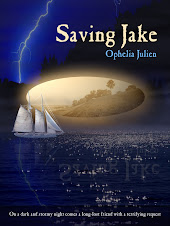
I have a fascination with shipwrecks, particularly on the Great Lakes. I don't know why that is, but both the research and the recreational reading I have done on the subject gave rise to a large part of my book Saving Jake. 

One can't read about shipwrecks without wandering into the territory of haunted or even ghost ships. And boy howdy, as they say, are there ever a slew of those. Haunted ships are a popular topic, and they turn up on my reality ghost story shows all the time. Last week, the National Geographic network did a special about that very subject and led with a piece on the the Queen Mary, probably the mother of all famous haunted ships. Docked in California, the Queen Mary offers ghost tours and boasts the spirits of a little girl who plays and laughs in the swimming pool area, a bride who wanders certain corridors and vanishes through locked doors, and a departed seaman who knocks his wrench against the walls of the ship's lower confines.

Google "Haunted Ships" plus "World War II," and see what pops up. Some of them are now museums. Not all of them are American. And I'd sure like to get to a bunch of them.

Ghost or spectral ships, though, are the ships that still sail the oceans, crewed by the dead, and sometimes harbingers of evil tidings. Thanks to "Pirates of the Caribbean," it is difficult to talk of ships "crewed by the damned" without starting to giggle. But there are quite a few ghost ships out there, not just The Flying Dutchman.

And then there are the derelicts, ships found drifting at sea that are perfectly fine except that there is not a living soul on board when they are found. The Mary Celeste is easily the most famous of these, and though there are some solid workable theories about exactly what happened to the crew, the captain, and the captain's wife and baby, the story has no definite ending.

Still, it's the drowned ships, the rusting or rotting hulls, the splintered masts, the scattering of cargo and debris lying in wait hundreds of feet below the waves, that always catch my imagination. Even if there is no tale of ghosts attached to a particular wreck, there is a combination of tragedy, sudden horrific death, and the echoes of despair that would make "haunted" an apt word to describe any of these ruined vessels. 

On the Great Lakes, a large number of shipwrecks occurred during the autumn months, and as summer winds to a close and the time of brilliant dying leaves, spectral trees, storms of rain and wind, approaches, I'll be thinking of those ships that have gone down, some of them very close to my favorite spot in Door County, Wisconsin. Buried at sea, forgotten, decaying slowly in the cold waters, sure. But at rest? I wonder.

Thursday, August 9, 2012

Don't Be Afraid of the Dark


There is a scientific name for nearly every phobia that can be imagined, and some that can't. Fear of the dark is called nyctophobia, and everything that I have read about it states the same thing: all children go through a stage of it. If a child doesn't outgrow the fear, or learn to cope with it, a full-blown phobia in adulthood is possible. But isn't there some kind of in-between status?

I don't have a phobia of the dark, but I am definitely afraid of it. I don't mind admitting that. I know people who are afraid of spiders, or water, or snakes, or bees or any number of things out there. One of my pet fears happens to be the dark.

At least one article that I read about this assured me that it's not really the dark that I fear, it's what the dark could be concealing. Hmm, yes, there's a thought. And thanks for planting that into the old brainbox, as well. Dark can conceal any number of things: a vampire, a ghost, a zombie, a monster, a stalker, a serial killer, so fearing what is concealed by it makes a great deal of sense. And I also freely admit that I fear all of the above.

But my basic issue is really with darkness. With the absence of light. In my case, with the absence of a great deal of my sight. And I know it's not just the shadows in my unlighted home, that may or may not be concealing something or someone harmful, that weigh on me. It's also the dark of night when I'm driving through it, especially on a highway. Oh, yes, there's the possibility that someone might not see my car and thus involve me in an accident. There's the possibility of a sleep-deprived driver losing control and taking me out with him. But I find that when I drive those dark expressways at night, I feel like I'm driving through an overturned bowl that some unseen giant has plonked down over my immediate environment. Or like I'm making my way through some endless tunnel with no end in sight. And I admit that when those thoughts cross my mind, my breath catches just a little and I need to start giving myself little speeches of encouragement.

I know I don't have the classic phobia: I am capable of functioning at night and sometimes, especially after another 100-degree, full-sun kind of summer day, I enjoy the cool and restful evening. But I enjoy it better if there are lots of stars in the sky, and I'm standing in my yard, not far from my door and the lights in my kitchen and living room.

As a child, I would accept an adult's "Don't be afraid of the dark" with a quavery "okay" and an attempt to figure out how not to be. As an adult, I would probably just say "Easier said than done." Nyctophobia is only one word for fear of the dark. There are at least three others. Is that like the Inuit having more than one word for "snow" or some Eastern European cultures having more than one word for "vampire"? Clearly the human race needed more than one word to label my particular fear. I guess that means I'm not alone in the dark.

Wednesday, August 1, 2012

Lonely Little Stand-Alone in a Serial World


Last year, I came up with a short piece for the Young Adult Authors You've Never Heard Of blog about how I didn't write a series but instead focused on stand-alone books, and at the time I was beginning to wonder if that was such a wise thing to do. After all, if a reader likes your work and really likes your characters, it would make sense to continue with that particular universe and that particular population. 

But I have never had a series in mind when I wrote my manuscripts. It's almost as if my characters had the one story to tell, and after having told it, went off on vacation to Patagonia or other parts unknown to me. I can find them if I want to, I suppose, but really they seem to be quite finished with me. Yet, more and more successful writers that I know keep dropping broad hints to me that a series would probably be a better product. I must admit I'm hooked on some series myself. And yet. And yet?

The only series I've ever had in mind is the usual detective kind. I don't think there's any mystery reader on the planet who doesn't carry around his or her own series internally, whether the protagonist is a cop, a detective, a moonlighter, a novelist, or a spiritualist of some kind, and since I'm a mystery reader of the first order, I certainly have a sleuth of my own currently renting space in my attic. I think a murder mystery could be fun to write. I think that all of us who read mystery stories probably would love to write them, too.

But when it comes to my YA supernatural stuff, a series never crossed my mind. UNTIL. I realized a few weeks ago that when I first started writing my little ghost story books, one of the most important settings was a place called Bridgeton Park Cemetery. When I wrote my second YA book, Saving Jake, I threw Bridgeton Park Cemetery into the story just as a private joke for myself. I didn't figure Jake was going to see the light of day anyhow. But he did. My next manuscript is awaiting my corrections and rewrites, and there is actually a wonderful place in the story to include Bridgeton Park Cemetery. I think I will.

Does it make sense to have a series that continues with a place -in my case, a cemetery- instead of with the characters? A friend of mine who is a professor of literature told me that William Faulkner centered a number of stories around a particular location. Stephen King, the King himself, set so many stories in Castle Rock that I can't even remember all of them. Not that I could compare myself to Faulkner or King, but I keep thinking that having a sense of place might give a reader continuity as nicely as a more traditional person-oriented series. It would not be like seeing the same characters book after book, but it would certainly expand the universe of every book I write that is built around that graveyard. And it would suggest that these characters could very well run into one another - or even know each other.

My still-to-be revised manuscript could use a sequel, I've been told, so I guess I would have to work up another story around Bridgeton Park. But as someone who spends free time visiting cemeteries, that probably wouldn't be much of a stretch.

Anyone else out there know of a series based on place rather than on people?

[This piece is also at Young Adult Authors You've Never Heard Of: obscurekidslitauthors@blogspot.com]

Thursday, July 26, 2012

In the Spirit of Education

There is currently a new ghost series on TV, this one called "School Spirits." I was wondering when someone was going to get around to covering haunted colleges since there seem to be so many of them. I was also wondering WHY there are so many of them.  In my 12 feet or so of shelf space devoted to ghost stories and haunted locations, I would guess there are almost as many collegiate hauntings described as there are castles and churches.

Personally, I once spent a retreat on a college campus in what was a disturbed, if not disturbing, dormitory. The room was perfectly fine: desk with lamp, bed, closet space, even a sink. The atmosphere in the room itself, however, was both watchful and waiting. I didn't sleep much there, those two nights. The hall outside the room was even worse. There was no bathroom attached to the bedroom and anyone needing to shower or use the facility had a long walk to get to it. The best part was creeping, speed-walking, or outright running past the back of the building's chapel, full of wonderful shadows that mercifully stayed put when I zipped through them en route to the lavatory. Whoever designed the path we used to answer the call of nature had a warped sense of humor.

Even my high school had some issues. The school was built in two parts: an older section that had been the original school, and the newer add-on that came about as enrollment increased. The older section, with its wrought-iron fence and gothic design (all-girls' Catholic high school) should have been the scary part, but it wasn't. The new side of the school with its modern tiling and squared-off rooms was the area that filled itself with unexplained noises and shufflings when students stayed late for extra-curricular activities like sports or rehearsals. 

And all of this leads me back to my original question. Why are places of education so frequently haunted? Do that many students commit suicide? Were there murders on campus in days gone by that have since been forgotten? Or is it just that the buildings soak up all of the adolescent and post-adolescent emotion and anguish that goes hand-in-hand with scholastic rites of passage, replaying those feelings for those sensitive enough to notice them?

I don't know the answer to this. All I know is that I have been to some scary buildings in my time and quite a few of them involve education.

Thursday, July 19, 2012

Late Thoughts on the Late, Great Richard Crowe

When we stopped subscribing to a printed newspaper, I realized I was going to lose touch with local news. But it still came as a bit of a shock when I learned, over a month late, that one of my favorite Chicago icons, Richard Crowe, had passed away June 6, 2012.

For anyone not from the immediate area, Richard Crowe was the very first Chicago ghost entrepreneur. He started doing Chicago Supernatural Tours back in 1973 and I must admit I took my first tour with him a year later. At that time, the idea of getting on a bus for a four-hour ride while the man at the front regaled us with stories of ghosts related to Chicago's frequently bloody past as we toured the city was mind-boggling. This was a grown-up doing a bus tour for no other reason than to share ghost stories. I was on board in more ways than one.

My second tour with Mr. Crowe was years later, and by then he offered the option of a midnight ghost story cruise. My younger daughter and her best friend accompanied my husband and me as we gazed at Chicago buildings from the river and the lake, and heard tales of what went on in these particular haunts. Ghost stories told under dark Chicago skies in an open boat are weirdly atmospheric. And a lot of fun. 

A few years ago, my daughter and I took what would be, sadly, our last tour with our favorite guide. By now, Mr. Crowe had added eateries and late-night shopping to his tour as we stopped at favorite locales like The Billygoat Tavern and Chinatown. I won a prize on that tour for knowing that Ira Levin was the author of Rosemary's Baby.

Recently, I heard that some folks actually left his tours mid-route because they were disappointed. I've always wondered if they expected him to conjure up a spirit while he was speaking. Having been on ghost tours in different locations, including York, England, I can guarantee that no ghost-tour guide promises a supernatural experience. They do, however, offer a wealth of local history and usually quite a bit of entertainment. Rumor has it that Stephen King himself took a Richard Crowe ghost tour.

I had the opportunity to chat with Mr. Crowe on those tours. I also met him at a signing where he autographed a copy of his book Chicago's Street Guide to the Supernatural for me. He was a friendly, warm giant of a man with a great voice for telling tales and a dry sense of humor. His love of his home town was evident in every story he told. And I doubt that any historical haunting in the Second City got by him. How fitting it is that he is buried in Resurrection Cemetery, home to Resurrection Mary, one of Chicago's most famous spirits and a mainstay of Chicago Supernatural Tours.

I will miss Mr. Crowe's annual Halloween visits on both radio and television talk shows, and his interviews with various newspapers. But I'm glad I had the chance to have met and talked with him. He's an integral part of the fabric that weaves my writing career together.