Thursday, June 28, 2018

Ghost Animals


I write so much about people coming back from the great beyond to visit (or torment, depending) the living. But what about critters? There are ghost horses in spectral tales from long ago. For instance, there are the horse-and-carriage stories from various estates in England. Sometimes the driver of the carriage is headless. Sometimes even the horses are headless. Nonetheless, they seem to find their way around those dark, foggy manors with no problem. Ghost horses were already such a part of the lore by the early 19th century that Washington Irving included one in his Legend of Sleepy Hollow back in 1820. Native American legends include ghost horses, and even one of our neighboring suburbs has a story about ghostly hooves that clatter down a particular street on many a haunted evening.

But what about other animals? Let's take pets, for instance. A lot of us have lost a beloved pet: how many of us could swear that pet came back to us, sometimes more than once?

We had a black lab mix named Beauty (we adopted her: we didn't name her!) who was very attached to my daughters when they were children, and slept in their room under the bunk beds. Beauty was a sweetheart, like so many labs, and always went up to bed with the girls when it was time for them to turn in. My younger daughter, who slept in the bottom bunk, would talk about how Beauty would actually shake her bed when having doggy dreams, or scratching a doggy itch. My daughter didn't mind; she found it kind of comforting to know the dog was always close at hand.

And then came the sad day that Beauty collapsed during a walk. We brought her to the vet, who kept her overnight for observation, and our beloved dog passed away before morning. We were all heartbroken, and our younger one missed her the most, no longer having that comforting little bed shake during the night. 

Except when she did. A few days after Beauty died, our daughter started reporting that she felt the dog shake her bed as always. She heard the familiar doggy snuffle that always accompanied her dreams. And she felt the other more vigorous disturbance that occurred when the dog needed to scratch an itch. This continued, pretty much on a nightly basis, for about two weeks, and then it stopped.

We had one more dog after Beauty, a chocolate lab named Mike. Like Beauty, Mike was a sweet, funny, playful dog, and like Beauty, he passed away earlier than we expected. The girls were older, so neither of them had Mike sleeping under their now-individual beds. But we all, from time to time, hear the jingle of his collar as if he were still ambling down the hall to get a drink of water. We still sometimes heard the click of his nails, the pause, the thump, and the sigh from when he used to go to his favorite corner and lie down. It took months before I stopped opening the door from the garage into the utility room very slowly, so as not to bang him in his inquiring nose when I got home. Mike visited with us more sporadically but maybe a little longer than Beauty did. And then, as always, one day he was gone.

The idea of ghostly animals is a thorny one. For skeptics, there's no doubt we're all imagining things. Believers in human ghosts might give pause at the idea of an animal ghost because that might imply that animals have souls. But for those of us who have experienced these gentle visits, they are as real as the animal we knew in its life, and that's enough for us. After all, if ghosts are real, why can't a loved and cherished pet come back to say a final farewell?

Thursday, June 21, 2018

A Rose By Any Other Name


Buddy and fellow writer, Jan Hinds, recently announced a contest asking her readers to help her name a character in the book she is currently writing.  That's a fun thing to do. And very brave,

I have also met a writer who, when she is working on a new story and doesn't have time to think up names, will write using "A", "B", etc. to designate her characters. For me, that's an impossible thing to do.

I need my characters' names before I can write them. For me, the name tells me so much about his or her back story. I can't even imagine being able to write about a character that hasn't been properly introduced to me. And what a battle that can be.

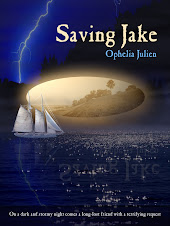
When I'm lucky, someone like Jake Holdridge will ring my doorbell, and wait for me to open the door and meet him. And when I opened that door and found him on my doorstep, he had turned up in his thrift-store trench coat, his red high tops, his shoulder-length hair (that looked like he cut it himself, because he did), and his one earring. To me, everything about his appearance and demeanor screamed "artist" and we were off to the races. EXCEPT that Philip Corts wanted nothing to do with either of us. I got his name very, very grudgingly, and even then, he wouldn't talk to me. That's why Saving Jake is written in first person from Philip's point of view: he wouldn't let me see enough of him to write about him in third person. To this day, I'm not exactly sure what he looks like because he never looks in a mirror when I'm around. He lets me know what he's thinking, and shows me his particular talent, but I've never been face-to-face with him the way I have with Jake.

For the Bridgefield Cemetery books, Cassie, like Jake, was breathing and speaking when I met her. I know what she looks like. I know how she thinks and what she feels about things and what motivates her. The same is true of both Eloise Janks and Nick Borja ,who came right through the front door with her and were also quite easy to get to know. Michael Penfield, on the other hand, was difficult. He didn't throw up actual roadblocks the way Philip did, but Michael wouldn't let me have his last name for months. All I knew was that it began with the letter "P." (Those who really know me will understand why I would name a character "Michael P", and it's all about paying homage to someone.) At any event, it took long weeks of trying names on and taking them off again, like pairs of shoes or a selection of hats, plus a trip to Door County, to find out his last name is Penfield.

Why do characters do that?

For me, a character's name is as important as any story he or she is going to share with me. In fact, a lot of what they do and how they behave are anchored in their names, at least for me. Cassie Valentine could never have been a Melissa Conway or a Jeannette Mayer or a Tiffany Anything, and be able to get the stories of dead people. She is Cassie Valentine and was always meant to be. Philip Corts could never have been a Walter Lennox or a Brent Hanlon or a Justin Thorne, and have psychometry as a gift. His ability is hard-wired into his name.

Thank about stories you love and the possibility of any of your favorite characters having a different name. Doesn't it change the flavor of the experience just a bit? (If it doesn't, you're lucky, and I'm neurotic. The second part of that sentence has always been true, though.)

Figuring out the names of my characters has always been part of the magic when coming up with a new story. I try names out and discard them until I get the "Rumpelstiltskin" magic, and then I'm off and running. It's sort of like looking through recipes until I find the one that's perfect.

I understand not all writers work like I do in terms of naming their characters. Holding contests and substituting alphabet letters aside, I'd sure like to know how those writers finally get to meet the folks whose stories they tell.


Thursday, June 14, 2018

Those Fun-Loving Victorians


Recently when Jim and I went up to Door County with friends, another couple, we visited a place called the Noble House in Fish Creek. Now, the Noble House dates back to 1875 and is disturbed enough to earn it a spot on the Door County Ghost Tour.


But that's an aside

When we toured the Noble House, it was to check out their newest exhibit, "A House in Mourning." What that means is that the entire house was furnished and decorated the way it would have been if someone died there during the Victorian Era. The exhibit was quite something and I'm really, really glad we went during the day.

As expected, all of the mirrors were covered in black cloth, the windows were covered with black curtains, and the clocks had been stopped at the time of death. But there was so much more. In one of the upstairs bedrooms, an array of appropriate mourning wear for the ladies was on display. All of it was black, and all of it was lovely, some with intricate bead work along the sleeves and bodice, and lace at the cuffs or collars. The dresses were authentic, so no touching was allowed, but they could be examined closely to see the details. Widows were required to wear mourning for two years after the death of a husband. No word on how long the guys wore mourning. Besides, they had it easy: a black band around the arm and that was that. At one point, the concept of "lachrymal bottles" was introduced. These little vials were used to catch the tears of a grieving individual and since the stopper at the top was perforated, when all of the tears in the bottle had evaporated, the person was allowed to stop mourning. The informational card alongside this display suggested it was to replace the rather rigid time-rules that had been in effect up to that point.

By the way, all those rigid rules of mourning were effective because people at that time were very superstitious and breaking any of these rules, they believed, meant that they would die. Seriously. It was the running theme of the tour: "And if you didn't do this, then you would die." 

But on to the rest of the tour.

There was a special holder on display so that those who stopped in could leave calling cards. There was also a display of the hair jewelry that was made from, of course, the deceased's hair. This included brooches and rings and lockets. All of it was very ornate and actually pretty, although I doubt very much that this particular tradition is about to catch on again. Back in the day, there was even a special tool used to collect the hair and then spin it into a sort of thread or yarn so that it could be worked with more easily. Who knew?

One of the backrooms featured an actual embalming table. Funeral homes didn't exist yet, so people would embalm their loved ones themselves using commercially prepared (and sold) embalming fluid. This particular house was set up so that a portable table could be used. Most people just embalmed their loved ones on the kitchen table. I'd say YIKES! but that moment is coming up a little later.

The front parlor, which was only used for very special occasions such as Christmas, Easter, and wakes, had an actual coffin on display. It was a closed casket, as was the custom back then, although before it was closed, the portrait of the deceased might be taken as it reposed in the casket. There was an abundance of flowers - the wealthier the person, the more flowers present. And the better to disguise the smell. 

Here's the little tidbit that took us all aback the most, though, I think. Beyond the home embalming, the hair jewelry, and the memento mori photographs, there was the little-known fact that after the person was embalmed, particularly on the kitchen table, the family would sit at that table and eat a small meal. With the body in the center. YIKES!!!! We all looked at the tour guide as if she had suggested that the coffin would be transported by broomstick to the cemetery with an escort of flying monkeys. But no, she reassured us that this had been A THING. A small meal was eaten around the table where the body reposed.

As a parting treat at the end of the tour, she produced a copy of a photo (that had been taken by someone who I'm guessing was on a ghost tour) that showed a face looking out of a second-story window when no one was up there. Jim and I took that ghost tour years ago and got our own weird picture of a face in the mirror, this one when Jim snapped a shot in one of the upstairs bedrooms. Obtaining such an image in that particular bedroom is a common occurrence. (And no, it's not a reflection of the person taking the picture, because to get the shot, one usually stands in the doorway and out of direct line with the mirror.)

The House in Mourning Tour was fun and informative, and there are things I will always remember. Like eating at the same table as an embalmed body, so I'm glad we stopped in that afternoon. And I'm also really glad that it WAS afternoon, a bright, sunny, summer afternoon. Because even on days like that, whether in mourning or not, The Noble House has very dark corners.

Thursday, June 7, 2018

Are There Clocks in the Afterlife?


We frequently think of there being no time, once we've passed from the physical world. Ghosts sometimes seem blissfully unaware of the passage of time, walking through walls where there once was a door, or strolling two feet below the earth because the paths they once knew have been covered over by years of change. 

And yet, I also know there are such things as "timed" hauntings. By that, I mean the kind of haunting that occurs at the same time, whether the it be on a regular date, a regular day, or even a regular hour of the clock. We had one at our house.

During my younger years I started keeping the erratic hours of the teen student: late nights, late mornings if possible (usually not), with naps whenever I could grab them. Staying up that late taught me that the house I lived in had a sort of "haunted routine." It would start at ten-thirty every night. I could have set my watch to it. The activities usually announced themselves with the sound of furniture shifting in whatever room I was NOT in. When I was in the sun porch, I would hear a chair move in the kitchen. If I was in the kitchen, something would scrape or knock in the dining room or the sun porch. But it was always at that same time.

Afterwards, there would be a literal string of noises, sometimes in the same room as I was, but just as often in a different room. I would be treated to what sounded like a number of people passing through and around the rooms on the first floor, including the one where I was seated and trying desperately to ignore the noise. There was also a sense of not being alone; it was like being present at a small dinner party and also being ignored. Sometimes those dinner party guests could get downright rowdy: the occasional loud bang that shook the windows in the sun porch but somehow failed to disturb the rest of my family sleeping upstairs were a shock to the system and always left me wide-eyed with my heart pounding.

And then,also like clock-work, everything stopped at one in the morning. Without fail. And without further disturbance. Well-trained dinner guests, I suppose.

But I'm not the only one to talk about that sort of thing. I knew a fellow once who lived in a slightly haunted apartment in Chicago. I say "slightly" because the haunting consisted of one thing only. Every night at ten PM his bedroom door would close itself. He noticed this happening night after night at the same time, so one night he decided to experiment, and made sure that his bedroom door was already closed at the appointed time. He wasn't disappointed. At ten o-clock sharp, the door opened itself, and then shut again. Apparently, his nightly door-closer was not to be deterred.

There are ghosts that turn up on anniversaries: battles, murders, suicides. Ghost story books are filled with tales of clock-work ghosts.

So if eternity is outside of time, and the afterlife is expanded beyond calendars, minutes, and hours, how do these revenants know when to show up for their appointed hauntings?

Thursday, May 31, 2018


I first "met" Richard Peck when I got a part-time job at the library as a circulation clerk. This meant that I checked out patrons' books, and also that I got to shelve the cartload of returned items, everything from vinyl records and puppets to puzzles and actual books. It's a great library.

And I had a great supervisor who never said anything even though I was the slowest re-shelver in the place. Mostly because I kept sampling the wares, and then finding additional interesting items on the shelves as I returned the books. While wandering the stacks like that, I ran into the works of a Young Adult writer named Richard Peck. I had never heard of him until I found him in that library, and once I did, I was hooked. How could I not be when he had titles like Ghosts I Have Been, The Ghost Belonged to Me, and Voices After Midnight? I read everything by him that the library had to offer.

Fast forward many years, and I had gotten a book published and joined The Society of Children's Book Writers and Illustrators. One year, the Society offered a two-day workshop down in Champaign-Urbana that included critiquing by peer group, and then a chance to read to and be advised by none other than Richard Peck. There was no way I was going to miss out on that so I registered and got myself downstate to finally meet the man.

And he was wonderful: funny, charming, and with a head full of amazing wisdom. I managed to make it through the critique group without too much damage (me, who never joins writers' groups) but I was basically quaking in my shoes at the idea of reading my work in front of the entire gathering as well as Mr. Peck. Talk about nervous. Read my stuff? In front of my hero? But I had signed up, so there was no getting around it.

I sat in the back of the room so that I wouldn't be the first to read. I was kind of hoping to either be the last, or that an earthquake would strike at an opportune moment and the floor would swallow me whole before I needed to open my mouth in front of him. But finally, after listening to my colleagues read their excerpts and being totally blow away by the collective talent in that room, it was my turn.

I started reading and although I was paying enough attention to the sheets of paper I held in my shaking hands, I was aware that Mr. Peck had gotten up from the desk at the front of the room and had walked around to sit down directly across from me. Trying not to freak out, I finished what I was reading, looked up at him, and he smiled. And then he said, "Well. You're very good, aren't you?" And that was as jarring to me as any earthquake could have been. To this day, I replay that comment in my head, in his voice, with that smile on his face. One of the best moments of my entire life, let alone my writing life.

We didn't have a chance to speak again; I needed to leave the workshop a little early, and he was busy with everyone who also wanted to speak to him. But we did exchange letters, and I have his in my treasured author-letters file. Physical proof that I had actually connected with my hero.

He shared two snippets of his wisdom with us at that workshop. Before we broke into our small critique groups, he said "Remember: writing is not done by committee." (Perhaps he didn't do writers' groups either--I never thought to ask him.) And then before we read our work aloud to him and to everyone else, he said "If you want to write for children, always remember. Childhood is a jungle, not a garden." This was a man who, no matter how many years he collected, remained very much connected to the child in his heart.

Later in his career, he switched from YA Supernatural to Middle Grade, and was awarded The Newberry for his book A Year Down Yonder. Previously, he had already received the Edgar, the Margaret Edwards Award, and the National Humanities Medal.

Richard Peck hailed from my home state of Illinois and became one of the biggest lights in young people's fiction. I'm so very grateful that I had a chance to meet him.

Thursday, May 24, 2018

Seeing Seaweed Charlie

When I was finishing up grade school, one of my older brothers was a student at University of Illinois-Chicago (known back then as "Chicago Circle"). There were four of us siblings, and as far as I know, all of us had a draw to the unearthly even when we were growing up, though my brothers were less likely to discuss that sort of thing.

However, my brother Edd made an exception when he told me about the night he saw Seaweed Charlie. Edd was driving home late one night after a party, as college students frequently do, coming south from Evanston into Chicago via Sheridan Road. When you follow that particular route, Lake Michigan will be on your left, and right where Evanston and Chicago meet, Calvary Cemetery will be on your right. He was alone in his car, making his way back to home and bed, when he saw something ahead of him on the road. In the dark, with only intermittent streetlights, he could just discern a human figure shuffling slowly from left to right. In other words, from the lake toward the cemetery.

He slowed down as he drew closer since the figure appeared to be in no hurry to avoid getting hit by any oncoming traffic. In fact, the figure's gait was slow and shuffling, although deliberate, as it made its way across the street. Now, Calvary Cemetery dates back to the 1800's around the time of the Civil War. It is a fairly large piece of land, enclosed by a tall wrought iron fence, and Edd couldn't figure out where this slow-moving pedestrian was headed. Until he saw it reach the cemetery fence and then,,,disappear. Even as he looked around to see if perhaps this person had taken a left or right to continue along the roadway, he realized there was no one in sight.

There was no other traffic on the road, so he actually pulled the car over at the spot where he had seen this mystery man cross in front of him and disappear at the cemetery, and got out to look around. He did find wet tracks leading from the lake to the fence, and he also found bits of weed and debris, the sort of thing you might find if you went digging around in the lake.

Puzzled, not sure what he had seen, he got back into his car and drove home. He told me about it some time later and I could still hear the bewilderment in his voice. He had come to the conclusion that he must have seen a ghost, because he couldn't explain how a living person could have disappeared through wrought iron, or vanished into thin air.

Being the avid ghost story collector that I was, I filed the tale away and was thus surprised when I ran into it as an adult.

The late (great) Richard Crowe, Chicago ghost-tour pioneer and avid ghost story collector himself, included Seaweed Charlie in his book Chicago's Street Guide to the Supernatural. No one knows who exactly it is that clambers out of Lake Michigan and vanishes into Calvary Cemetery, but there are suggestions that he might be a naval aviator whose plane crashed in Lake Michigan during a training exercise mid-twentieth century. The plane was recovered but the aviator never was. (You can Google Seaweed Charlie - AKA "The Aviator" - and find all manner of stories about him, from possible background details to witness accounts.)

Of course, I didn't find out about all of this until years after I first heard Edd's story. But back in those days, as a kid, whenever I was in the car and was being driven along that route at night, I would close my eyes until we were well past Calvary Cemetery for fear of having my own glimpse of Seaweed Charlie. I've heard that sightings of him have calmed down, recently. Apparently he was seen most often during the 1950's and -60's. But he's still included in most ghost story books about Chicago. 

Now that I've moved out of the city, I don't pass that way at all. But I sometimes wonder: if I did, would I have a chance to see him for myself? 

Unlike my brother, though, I don't believe I would get out of the car and go looking for that wet, seaweed-covered track from the edge of the lake to the cemetery fence. No, I think seeing him would be quite enough for me.

Thursday, May 17, 2018

Going Back. Or Not.


I mentioned in last week's post that I really enjoyed the TV show "Celebrity Ghost Stories." I watched it faithfully until the network decided to cancel it (boo, hiss.) But during that time, I became hooked on its sister show, "The Haunting of..." starring Kim Russo.

Kim Russo describes herself as a psychic medium and I was able to see her in person (with Jim in tow, of course) at one of her presentations. She's funny and warm and very New York. I've learned a great deal by watching her. "The Haunting of..." featured Kim meeting up with one of the celebrities from "Celebrity Ghost Stories" at the place where said celebrity experienced her or his paranormal experience. She would walk through the site with the famous personality at her side, and discuss what that person experienced. And then she would talk about why it probably happened. Some of the stories were outright heartbreaking. When she worked with the late (great) Rowdy Roddy Piper, for instance, she determined that the haunting was being caused by a friend who had passed years before and was reaching out to let Mr. Piper know that he was watching out for him and for his family. This friend was someone who had helped the famous wrestler through some of the worst times of his life, and had passed away at a young age in a car accident.

There was also the rock star whose daughter came back to comfort him when his grief threatened to derail his entire life. She came to him on several occasions and stayed for a little while each time, to help him understand that she was still close to him.

Some of the entities, however, were less than benevolent, and Ms. Russo did help take care of the problem for several of her well-known clients.

The point of the show was to go back and confront personal fear from a specific incident, and to resolve it so that the person could move on. The part of that I find the most interesting is the idea of going back.

Would I? I think about the house I grew up in. I have tons of wonderful memories from that house since I lived in it from the age of three, got married in it, and moved out of it as a young wife and mother. On the other hand, while I was in college, I had recurring nightmares (I mean the kind that give you cold sweats) that I would wake up in an empty house to find a note from my parents explaining that they had retired to Spain and that the house was now mine. NOOOOOO! I seriously used to freak out at the idea: growing up there with my large, extended family was one thing. Living the rest of my life there? No, thank you.

So would I go back? If I had the opportunity to take Kim Russo into that house with me and say "This is where I felt that bony hand resting on the headboard of my bed one night" or "This is where we heard the baby crying" or "This is where the son of our dinner guests saw the old lady standing" or even "This is where my clairaudient friend heard those nightly footsteps originate before they climbed the stairs to the second floor and stopped outside my bedroom" (for the full story, scroll back and see blog post from April 26, 2018). Would I have the courage to hear the answers to my questions? Like why is there a bricked-up staircase and room in the coach house apartment in the garage? Or what is the malevolent-feeling presence that could drive everyone from a given room at random times? Or why did there seem to be a nightly haunting that started at about 10:30 every night and ended at around 1 a.m? Or who was the ghostly figure that both my husband and our cat saw at the bottom of the stairs one night?

Part of me would LOVE to have her walk through that house and explain everything. And part of me says, I'd really rather not know.

Weird things happened in my childhood home: objects disappearing and then coming back weeks later; disembodied voices; lights and radios going on by themselves; unexplained and loud noises in the middle of the night. There was a quality of strangeness to that house, and I always found it interesting when my childhood friend, who became a real estate agent, would call me up and say, "Hey, your house is back on the market again." That happened frequently after my mother sold the place and moved away.

If you've had a paranormal experience and had a chance to go back with a true psychic medium to find out what was really going on, would you do it?