Are you, like me, haunted by memories? And can you also say, like I do, that I hope that is true for the rest of my life?
I sometimes think I am on a fast track to Alzheimer's, and I don't mean that to be offensive in any way. I've even gone to see a neurologist who asked me the test questions and administered the little games meant to see if my memory is slipping up in any way. He thought I was fine. (But he also wanted to see me in a year. What did that mean???) I peruse articles about dementia, Alzheimer's, senility, and Lewy Body, studying early symptoms and comparing them to my own experiences.
One of the things that always jumps to the fore is the idea that a lot of patients with the above-mentioned conditions are great with memories of childhood and the past; better, in fact, at recalling grade school buddies than what they might have had for lunch yesterday. That is becoming truer for me than it was before. I like to think that I am running out of memory storage and that's why I have all the old stuff and don't retain all of the new stuff, but I'm not sure that's quite it.
Doctors say that people with Alzheimer's will forget basic things like what a watch is for, or how to work with a checkbook. Normal people, they say, are more likely to forget a name, or a face, or some other item that frequently will swim up to their conscious memory minutes or even hours later. Normal people have that tip-of-the-tongue thing going, like I do. Doctors also say that stress, lack of sleep, and lack of exercise can play havoc with one's ability to remember, as do some non-neurological health issues, and some medications. And all of that is reassuring.
But I don't want to lose my memory. Sometimes people tell me that I have a strange one. I'll give them that, I guess. I used to think that everyone remembered almost everything like I did, but lots of people I talk to can barely remember high school, let alone what they liked to wear when they were five years old (I favored corduroy overalls, myself). So maybe the way my memory functions is slightly different than the memories of other people.
But I have since met other writers whose minds work rather like mine: I can recall every teacher I had in grade school and high school, entire conversations from thirty-five years ago, a song of rebellion dating back to the Spanish-American War that my sixth grade teacher played during music class; what my favorite umbrella looked like when I was in high school, the songs that were playing on the radio during my freshman (and Sophomore and junior and senior) year/s of college when I drove to class in the morning, and lots of other probably useless and ridiculously detailed bits of information. I think writers -some of us- need to have that so that we don't struggle so much with writing background and day-to-day scenes when we work.
Back in the day when I was reading John D. MacDonald and his amazing Travis McGee books, I remember him writing that McGee's friend Meyer had a memory like a house filled with rooms containing different kinds of information. When McGee wanted to know something and he asked Meyer about it, his friend would disappear into one of those rooms and then come back out with the answer.
Fast forward to the movie Dreamcatcher, based on the novel by Stephen King. The character Jonesy had a "memory warehouse." I will never forget the sight of Damian Lewis trundling his wheelbarrow through that warehouse and passing collections of things like "song lyrics."
Unlike the Medieval scholars, I don't have a memory palace. I don't even a warehouse like Jonesy. I've always thought of my own memories as being in something like an old-fashioned card catalog at the library. I have a thing about alphabetical order (ask anyone who knows my CD collection) so I guess that's not surprising. Lately I've been worried about that card catalog, though. I really don't want to lose track of my memories.
Especially the really evocative things like certain songs, or certain smells, that can bring me back into an entire time/place/setting/event in a way that is so real that I used to think I could time travel if I tried hard enough. There are times when an old conversation with someone from years ago will play like a movie through my head and I would swear that if I reached my hand out just the right way, I could touch that person again. I am haunted, in that respect, and that is something I never want to lose.
Judy Blume once wrote that she could remember what she wore to school her first day of Kindergarten. Maybe those of us writers who are fascinated by memories tend to find ways to write about them: MacDonald and McGee's friend Meyer; King and the memory warehouse; more recently, J.K. Rowling and the pensieve. I love that concept. There are times I could use a pensieve.
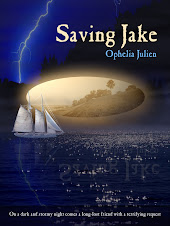
But to get back to memory. I played with it in Saving Jake. Part of the premise of that book, the particular "what if" question (a "what if" question or two can be found at the base of everything I write) was, "What if someone was so good at retrieving memories that he could actually walk around in someone else's?" And along came Philip Corts.
Memory is an amazing thing. It's also double-edged in that if you are the kind of person to retain memories, you retain ALL of them, not just the fun or happy ones. And those vivid memories of past hurts, betrayals, disappointments, rejections, can still wound. Some might call it dwelling on the past, but it really isn't about dwelling on anything. I don't have to go very far into myself to pull up past injuries. And that was summed up by yet another writer, William Faulkner, when he wrote: "The past is never dead. It's not even past."
Are you like that, too? It's kind of a strange way to live. But I like it.